

Blog Details

Dark Pool vs Options Flow: What Smart Money Signals Mean - Flowtopia
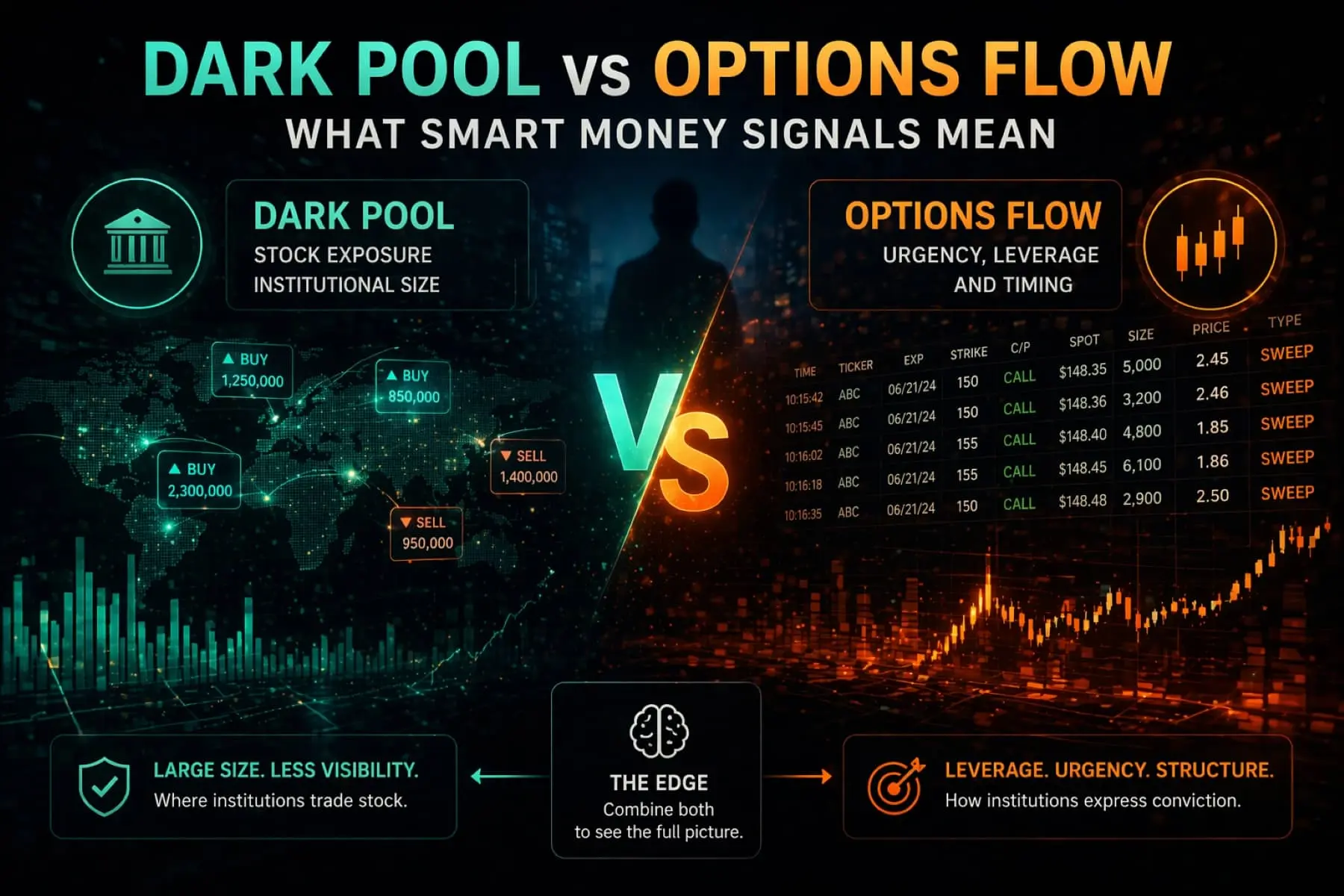
Institutional intent is rarely obvious in real time, which is why traders often rely on Flowtopia to make sense of developing options flow and dark pool activity. Traders usually have to infer it from execution patterns, urgency, and positioning. That is why dark pool vs options flow is such an important comparison: together, these signals can reveal how larger participants may be positioning before the move becomes clear to everyone else.
Traders often lump dark pool prints and options flow into the same category, but they are not telling you the same thing. The dark pool vs options flow debate matters because dark pools mostly reflect stock execution, while options flow shows how risk is being expressed through leverage, strike selection, and timing.
Quick answer for traders
If you only want the short version, here it is:
- Dark pool activity is more useful for spotting large stock exposure and areas where institutions were willing to trade size in the underlying.
- Options flow is more useful for spotting urgency, leverage, and short-term positioning around a catalyst or key level.
- In the dark pool vs options flow comparison, the strongest read usually comes when both line up in the same name, but neither should be treated as a prediction on its own.
Why traders confuse these signals
Traders often misunderstand the dark pool vs options flow comparison because both are used to track institutional behavior, even though they serve different purposes. Dark pools are more useful for seeing where large stock transactions took place with less public visibility. Options flow gives more insight into structure, aggression, and timing.
Dark pools mostly show stock exposure
Dark pools are a form of alternative trading system. In dark pool trading, participants can match orders without publicly displaying them to the wider market before execution. Investor.gov notes that ATSs are SEC-regulated trading systems and that dark pools let users place orders without publicly displaying size and price to other participants in the pool. In practical terms, dark pool activity usually tells you that meaningful stock changed hands in the underlying.
What it does not tell you is whether that order was opening, closing, hedging, crossing inventory, or paired against something else.
Options flow reveals structure, leverage and timing
Options flow smart money signals are often noisier, but they carry more detail. Strike, expiration, premium size, execution quality, and repeat activity can show whether a trade looks urgent, spread-like, short-dated, or part of a broader campaign, especially when traders can track repeated contract flow and execution behavior in real time.
Cboe describes routing strategies that can split orders across market centers to clear liquidity at the top of book, which is why sweeps are often read as more urgent than passive fills.
Traders also compare contract volume with open interest because unusually high volume can suggest fresh positioning rather than routine turnover. That is why options flow often reacts faster around catalysts.
In practice, repeated contract activity, execution behavior, and contextual filtering, along with real-time options flow, can help traders separate real signal from background noise.

What Smart Money & Institutional Flow looks like in practice
The dark pool vs options flow comparison becomes more useful once you stop asking which dataset is simply “better.” The real question is what kind of institutional behavior you are trying to detect: early positioning, stock accumulation, event-driven urgency, or confirmation.
When options flow deserves more weight
Suppose a stock is sitting under resistance two days before earnings. Then call sweeps start printing at or above the ask, volume surges far past normal activity, and the same strike-expiration combination keeps showing up across multiple exchanges. In that situation, the options tape is showing urgency, leverage, and a defined timing window.
This is where contract-level context matters. Repeated trades at the same strike, bursts of rapid transactions, and concentration in specific expirations are the kinds of patterns that usually deserve closer attention. When those conditions cluster around a known catalyst, options flow usually provides the earlier signal.
When dark pools deserve more weight
Now flip the setup. Price has already been moving for several sessions, and repeated off-exchange stock prints start appearing near the same zone. In dark pool trading, this kind of repeated activity is often a sign that larger participants are active at that level.
That can matter more than aggressive options flow when you are evaluating durability. A huge call sweep can be exciting and still expire into nothing. Repeated stock prints around a level can matter because they may point to an area of accumulation, distribution, support, or supply that remains relevant after the headline passes.
Dark pool vs unusual options activity
In reality, traders comparing dark pools with unusual options activity are usually trying to answer a more practical question: which signal should I trust first when I am trying to follow institutions? The answer depends on whether you need timing, confirmation, or both.
In practice, dark pool vs unusual options activity is not a winner-take-all debate. It is a question of what the tape is revealing first and what you still need to confirm.
Which is better for timing?
In a dark pool vs options flow analysis, unusual options activity usually has the edge when timing matters most. Short-dated sweeps, repeated activity at the same strike, and strong volume relative to open interest can show that traders are targeting a very specific window.
Which is better for confirmation?
If the move is already underway and you want to know whether larger players are supporting it with stock exposure, dark pools can be more useful. Options can make conviction look larger than it really is, because leverage allows traders to control sizable exposure with a smaller premium. Stock prints do not solve the interpretation problem, but they can carry more weight when you are assessing whether real capital is leaning into the move.
How to read both without fooling yourself
Traders who handle the dark pool vs options flow question well do not rely on a single print or one oversized order. They look at sequence, repetition, price confirmation, and whether the original read still holds up after alternative explanations are considered.
- Start with context. If the name has earnings, a macro event, or a chart level everyone is watching, the bar for interpreting flow should be higher because volume naturally increases around known catalysts.
- Use options flow smart money signals to understand urgency and short-term positioning. Repeated sweeps, aggressive fills, and concentrated activity near one strike or expiration matter more than a single oversized print.
- Use dark pool prints to see whether the move is also being supported by stock participation. If stock and options align, the read becomes stronger.
- Check whether the pattern persists over time instead of reacting to a single burst of activity.
Common traps and false positives
Most failed flow reads do not come from bad data. They come from overconfident interpretation. Traders see a large print, attach a story to it, and forget how many institutional trades are tied to hedging, inventory management, spreads, or routine portfolio work.
- A large call order is not automatically bullish. It may be part of a spread, a stock replacement trade, or a hedge against another book.
- A dark pool print is not automatically accumulation. In dark pool trading, large size can reflect crossing activity, rebalancing, or liquidity transfer rather than a clean directional bet.
- A single aggressive sweep is not enough. Isolated prints are weaker than repeated behavior across time, price levels, and sessions.
- Confirmation bias ruins more flow reads than the data does. When price refuses to confirm, treat that as information instead of forcing the original thesis.
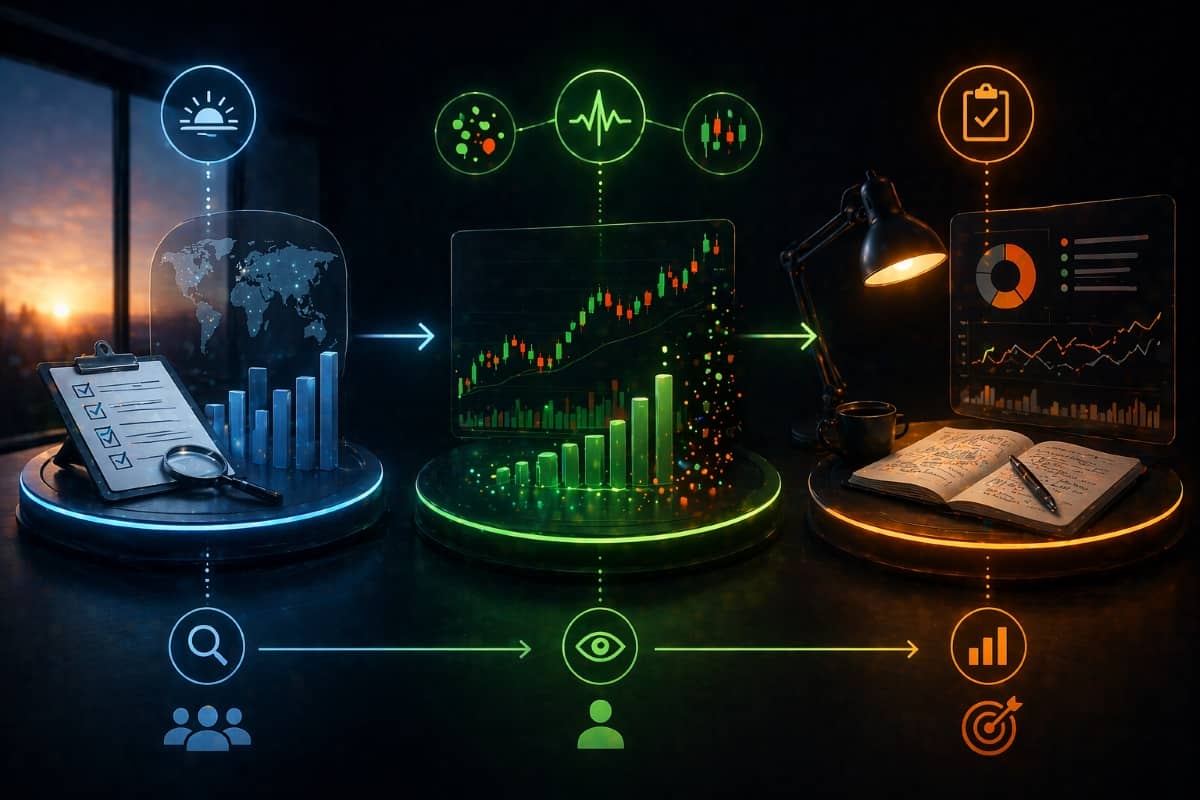
A practical workflow for serious traders
A practical flow review works best in stages. Before the open, identify catalysts and the names most likely to attract institutional participation. During the session, watch whether options activity is becoming concentrated, whether execution looks aggressive, and whether stock prints begin to show up around the same levels. After the close, review which signals persisted and which ones faded.
Before the move gets obvious
Look for concentration rather than spectacle. One huge print is less useful than a series of related prints that point to the same strike, expiration, or stock level.
While the move is developing
Watch the relationship between flow and price. If calls are lifting the ask and price cannot push through nearby resistance, that hesitation matters. If dark pool prints keep showing up near the same zone and pullbacks keep getting bought, that matters too.
After the session ends
Review the tape with some distance. The goal is not to celebrate the prints that worked and ignore the ones that failed. It is to identify which features kept showing up before high-quality moves and which ones mostly created noise and excitement.
Final take
The cleanest answer is this: dark pools and options flow are not rivals. They are different lenses on institutional behavior. Options usually tell you more about urgency, structure, and timing. Stock prints usually tell you more about where real size was willing to transact. If you reduce flow analysis to one feed, you lose the nuance that makes the interpretation useful.
So, if you are still framing the problem as dark pool vs unusual options activity, shift the question. Ask what the institution may be trying to accomplish, which instrument best fits that objective, and whether the behavior is repeating in a way that holds up under scrutiny. That is where the real edge comes from. Tools that combine live flow, contract-level detail, and historical context can make that process much easier.
Similar Blog You
May Like
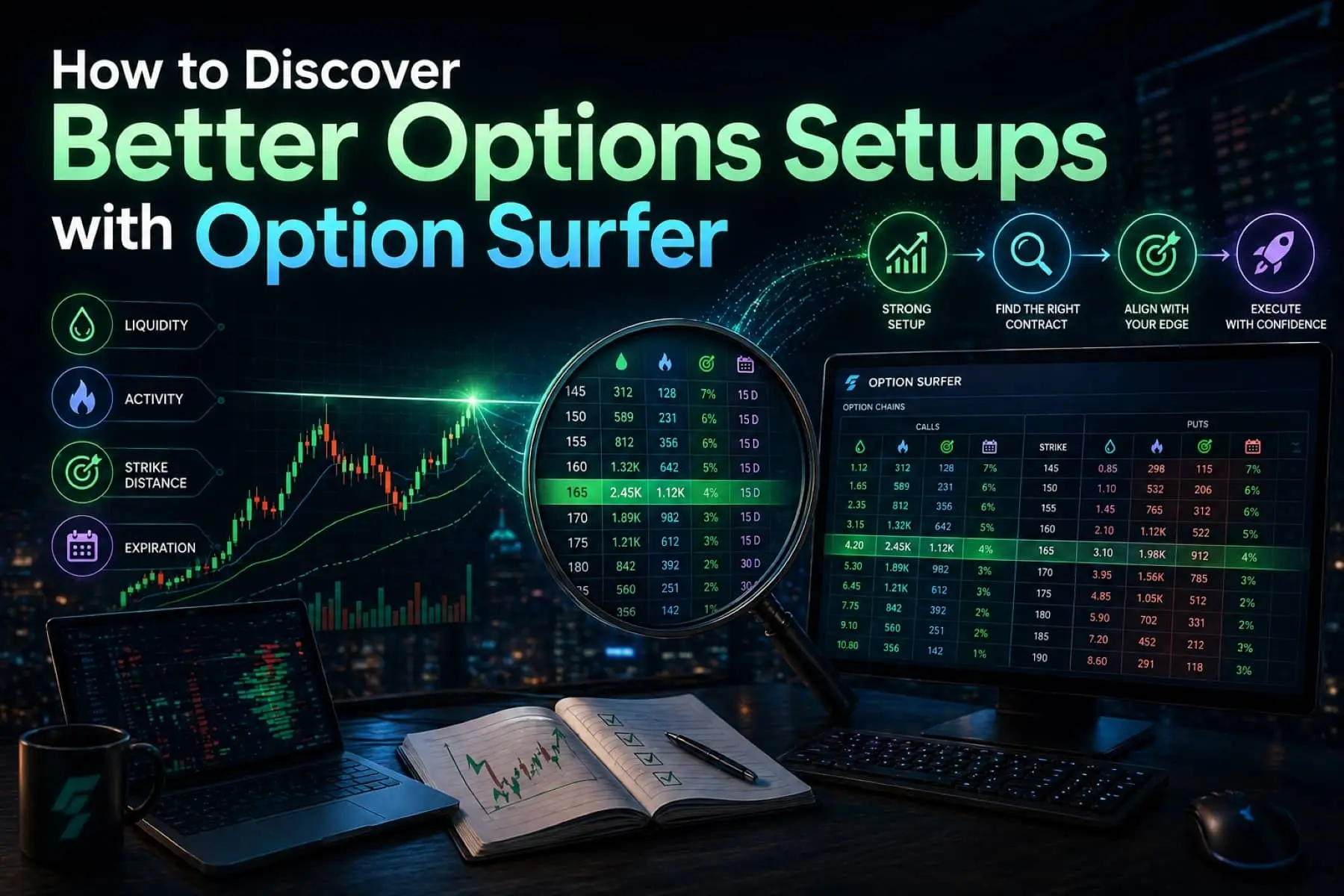
Understand how institutional money moves and turn complex options data into clear, actionable insights in real time.

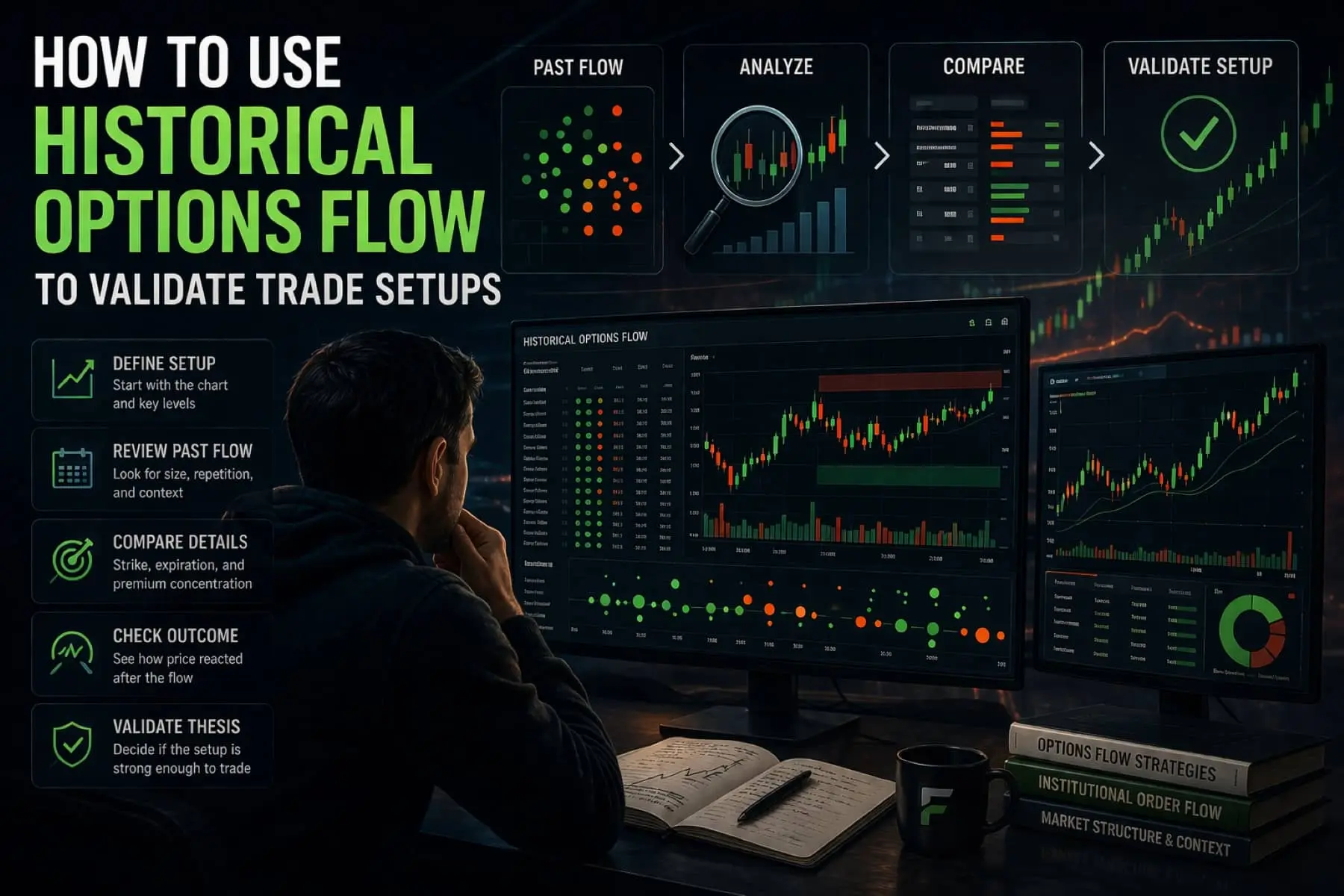
Join traders using real-time options flow, institutional data, and advanced tools to make faster, more informed decisions.