

Blog Details

How Contract Tape Helps Traders Read Options Flow - Flowtopia

Most traders rely on charts to understand what the market has already done. But charts do not show how options positions are being built in real time.
That is where the contract tape becomes useful. Instead of summarizing activity after the fact, it shows individual options traders as they are executed, giving trades a closer look at how market participants are entering positions throughout the session.
This matters because the way trades appear can reveal more than the total volume alone. Repeated executions at the same strike, fast sequences of orders, or concentrated activity in one expiration can all provide clues about how interest is developing beneath the surface.
For traders who want a more detailed view of options flow, the contract tape helps connect raw execution data with the broader story of positioning. Used correctly, it can make it easier to separate isolated trades from activity that may carry more weight.
In practice, raw contract tape data can be difficult to interpret on its own. Flowtopia helps structure this activity into a more visual format, making it easier to spot repeated execution, volume concentration, and bid/ask behavior across strikes and expirations.
What Is the Options Contract Tape in Options Flow Analysis?
The options contract tape is a real-time stream of executed options trades that shows how activity is actually happening in the market, trade by trade.
Instead of relying on aggregated summaries, the tape focuses on individual transactions as they occur. Each entry represents a completed trade, allowing traders to see how contracts are being traded, not just where activity is appearing.
This level of detail provides a clearer view of how positions may be developing throughout a session. Rather than looking at total volume alone, traders can observe how activity unfolds over time.
Each trade typically includes key details such as contract size, premium, strike price, expiration, and execution timing.
Key Elements of the Options Trade Tape
- contract size and premium.
- strike price and expiration.
- execution relative to bid and ask.
- timestamp of each trade.
Individually, these elements offer limited insight. But when observed together, they begin to form patterns that help traders understand how positioning is building beneath the surface.
Why the Contract Tape Matters in Options Flow Analysis
The value of the options contract tape comes from how quickly it reflects real market activity. Instead of waiting for aggregated summaries, traders can observe how participation develops in real time.
By tracking options trades as they appear, traders can see whether activity is concentrating at specific strikes or spreading across multiple expirations. This helps distinguish between focused interest and broader rotation across the market.
More importantly, the tape reveals behavior, not just outcomes. It shows how trades are unfolding over time, offering insight into how positions may be building rather than simply where activity appears.
For example, a single large trade may seem significant on its own. But when similar trades continue to appear at the same strike within a short period, it often signals more consistent participation. This type of repeated execution tends to carry more weight than isolated activity.
This is where it becomes especially useful. It helps traders separate random trades from patterns that suggest more sustained interest.
In more advanced analysis, traders also compare this activity with implied volatility. When repeated buying appears alongside rising volatility, it can indicate stronger directional conviction rather than passive or reactive positioning.
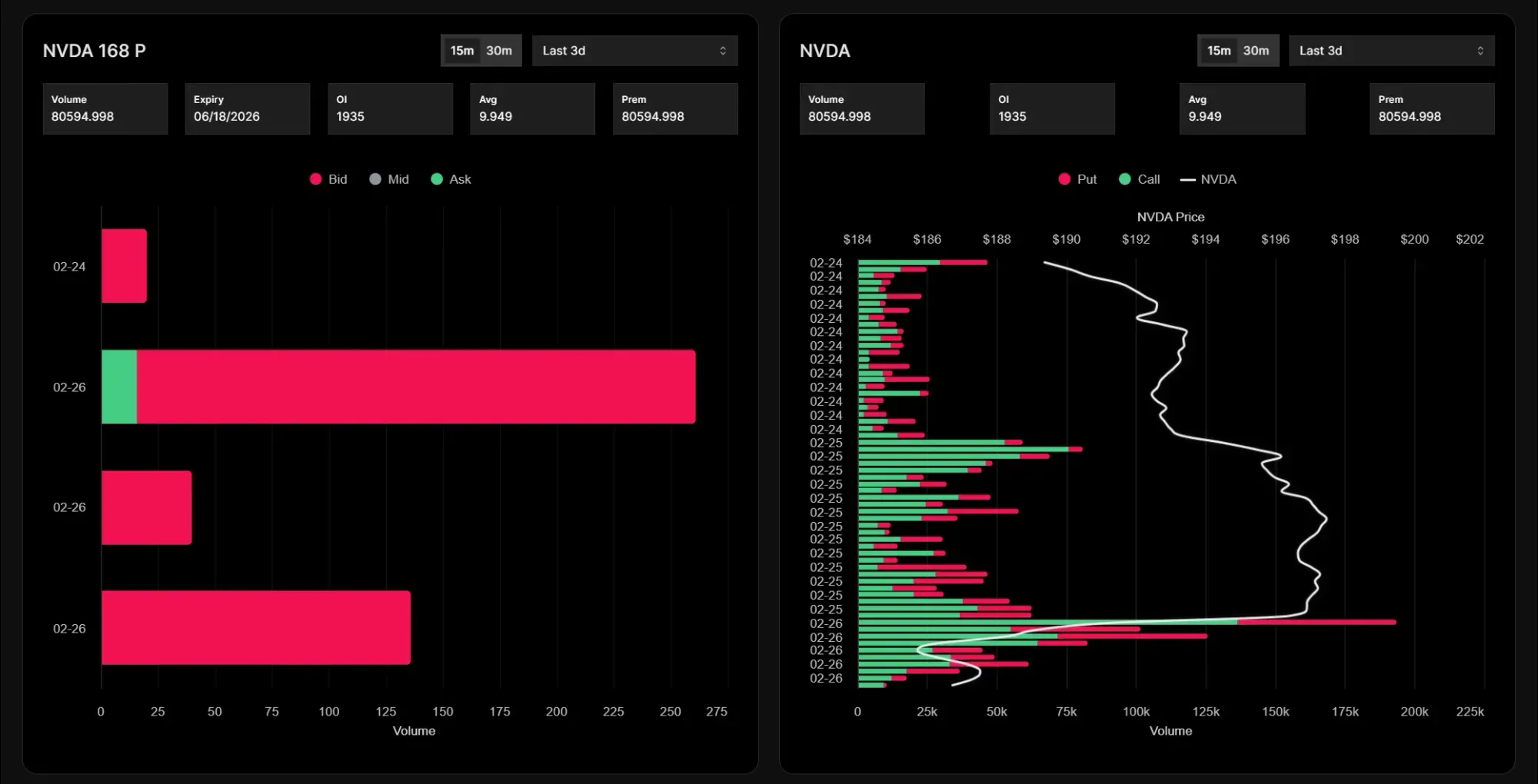
How Traders Read the Options Contract Tape in Real Time
At this stage, the challenge is not seeing the data it’s knowing which activity actually matters.
Reading the options contract tape requires a different mindset. Traders are not looking for a single signal. Instead, they focus on patterns such as consistency, repetition, and how activity develops over time.
Identifying Trade Clusters
One of the first things traders look for is clustering. When multiple trades appear at the same strike or expiration within a short period, it often signals repeated interest.
If these clusters continue, they may indicate that positions are being built gradually rather than appearing randomly. This type of accumulation tends to carry more weight than a single large trade.
Understanding Execution Flow
Execution flow refers to how trades unfold over time, including their speed, sequencing, and consistency.
A rapid sequence of trades can suggest urgency or stronger participation, while slower and more spaced-out execution may reflect a more controlled approach. Observing this flow helps traders understand how actively market participants are engaging.
Tracking Repetition Across the Session
A single trade rarely provides enough context. However, when similar trades continue to appear throughout a session, they begin to form clearer patterns.
Over time, traders learn that repeated execution at the same levels tends to matter more than isolated activity. This makes it easier to filter out noise and focus on behavior that continues to develop.
Contract Tape vs Aggregated Options Flow Tools
The options contract tape and aggregated flow tools serve different but complementary roles in options flow analysis.
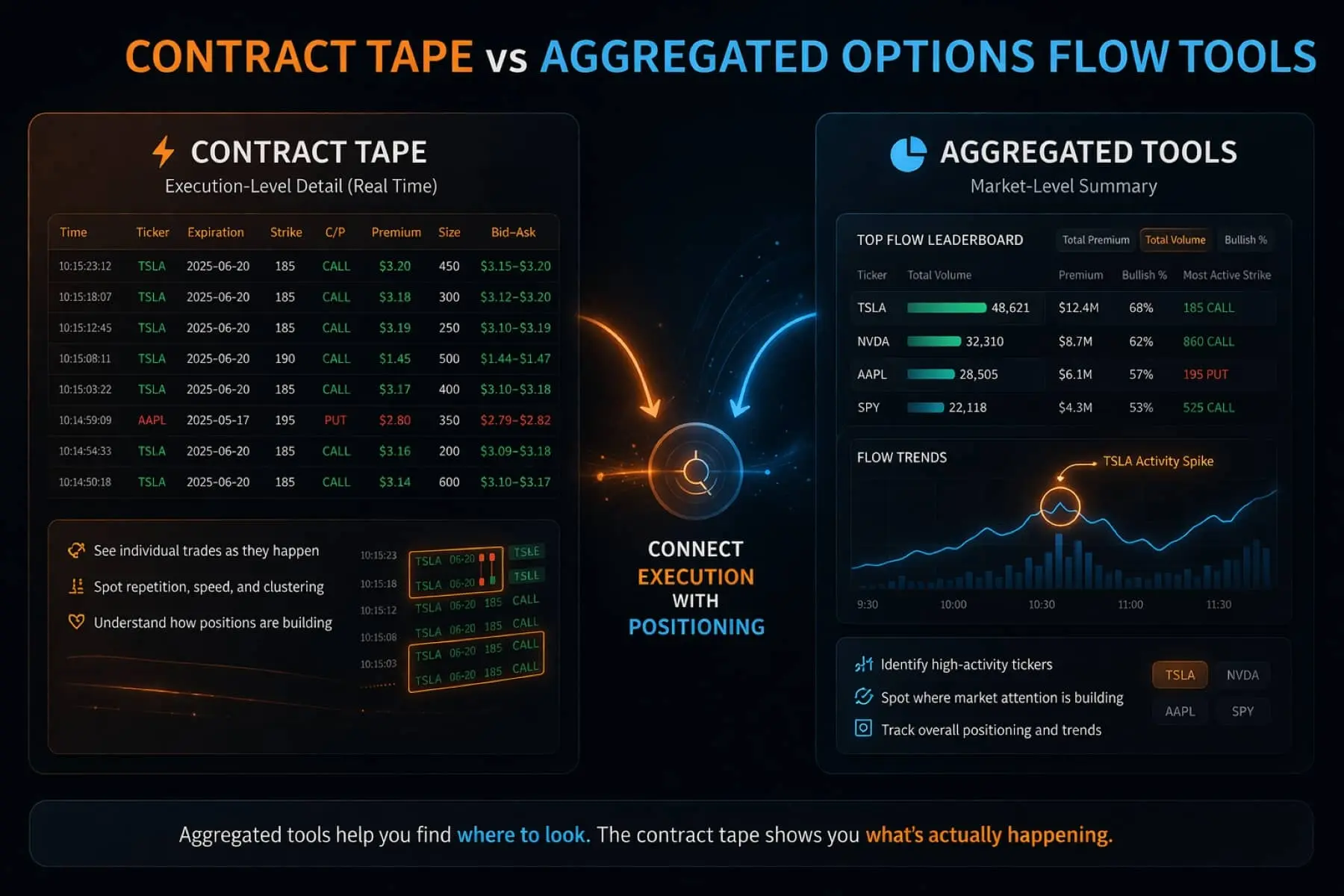
The contract tape provides execution-level detail, showing how trades are actually happening in real time. In contrast, aggregated tools summarize activity and highlight broader trends across the market.
For example, traders often use tools like the Top Flow Leaderboard to quickly identify high-activity tickers and areas where options flow is concentrating. These tools help surface where market attention is building.
It also adds another layer of context by revealing whether trades are repeating, how quickly they appear, and whether activity is building consistently over time.
When used together, these approaches allow traders to connect execution behavior with broader positioning. Aggregated tools help identify where to look, while the tape helps explain what is actually happening within that activity.
Once traders understand how to combine these perspectives, they can begin to recognize more consistent patterns within the tape itself.
Common Patterns in the Options Order Flow Tape
As traders gain experience, certain patterns begin to appear more frequently in contract tape activity. These patterns do not provide certainty, but they help highlight where interest may be building.
Repeated trades at the same strike
When similar trades continue to appear at the same strike price, it often signals sustained interest rather than isolated activity. This type of repetition can suggest that positions are being built over time.
Bursts of rapid transactions
Sudden sequences of trades within a short period may indicate increased urgency or stronger participation, especially during volatile market conditions.
Concentrated activity in specific expirations
When activity clusters around a particular expiration, it can reflect focused positioning within a defined timeframe.
These patterns help traders understand not just where activity is occurring, but how it is developing across the market.
In many cases, traders also observe how these behaviors evolve across multiple sessions. When similar patterns continue over time, they may indicate more sustained positioning rather than short-term participation.
Repeated activity that aligns with key price levels can also become more relevant, as those levels may attract continued attention in future sessions.
To better identify when activity stands out from typical behavior, traders often combine contract tape analysis with structured tools that highlight unusual options flow and broader market trends.
Limitations of the Options Contract Tape
Despite its advantages, the options contract tape has several limitations that traders should keep in mind.
Incomplete context for multi-leg strategies
Many options trades are part of more complex strategies. Without additional context, it can be difficult to fully understand how each individual trade fits into a broader position.
Inability to determine intent
The tape shows what was executed, but not why. It does not reveal whether a trade is directional, part of a hedge, or simply an adjustment to an existing position.
High data volume
The contract tape can move quickly, especially during active sessions. Without a structured approach, it can become difficult to follow and interpret in real time.
Because of these limitations, it should not be used in isolation. A single trade rarely provides enough context, and meaningful interpretation usually requires observing patterns over time.
These constraints also highlight where it becomes most effective when combined with other tools that provide broader context and help organize activity into clearer signals.
How the Contract Tape Improves Decision-Making
As traders consistently analyze contract tape patterns, they begin to understand how positioning develops over time instead of reacting to isolated trades.
This shift helps them focus on activity that continues to build, rather than short-lived signals that may not carry lasting significance. As a result, decision-making becomes more structured, selective, and consistent.
In practice, experienced traders often rely on a simple principle: repeated execution at the same levels tends to matter more than isolated trades. By prioritizing consistency over single events, they can filter out noise and gain a clearer view of how market activity is evolving.
Best Practices for Using the Options Trade Tape
To use the options contract tape effectively, traders should focus on patterns rather than isolated trades.
Repeated execution tends to provide more reliable insight than single transactions, especially when activity continues to build at the same levels over time.
It is also important to combine contract tape analysis with aggregated tools. This helps confirm whether observed activity is meaningful within the broader market context.
Maintaining a structured approach is equally important. Without a clear framework, the speed and volume of the tape can make it difficult to interpret what actually matters.
Finally, traders should remain adaptable. Market conditions can change quickly, and the way tape activity should be interpreted may shift throughout the session.
Conclusion
The options contract tape offers a real-time view of how options activity develops beneath the surface of the market. By focusing on patterns such as repetition, consistency, and execution flow, traders can better understand how positioning builds throughout a session.
While the tape does not provide definitive answers on its own, it plays an important role in options flow analysis by revealing how trades are actually executed. This helps traders move beyond isolated activity and focus on behavior that may carry more significance.
For traders looking to improve how they read options flow, combining the contract tape with structured tools can provide a more consistent and practical approach to analyzing market behavior.
Similar Blog You
May Like
Understand how institutional money moves and turn complex options data into clear, actionable insights in real time.


Join traders using real-time options flow, institutional data, and advanced tools to make faster, more informed decisions.