

Blog Details

How to Read Open Interest and Volume in Options Flow - Flowtopia

A large options print can grab attention quickly, but on its own it often says less than traders assume, especially when traders rely on tools like Flowtopia to interpret options flow more effectively.
That is where a lot of traders misread the tape. They see size, assume conviction, and build a story before they have enough context. If your goal is to understand institutional intent, volume and open interest have to be read together, not as separate signals.
Volume shows how many contracts traded during the session. Open interest shows how many contracts remain open after clearing. The Options Industry Council explains that open interest changes only after opening and closing orders are matched at the end of the process, which is why intraday volume does not automatically translate into new outstanding positions. CME’s education materials make the same distinction: volume captures activity, while open interest reflects positions still open in the market. When you read them together, you get a much better sense of whether a contract is merely active or whether new positioning is actually developing.
Why these two metrics belong in the same read
A lot of flow mistakes come from oversimplifying the data. Traders often assume volume means new interest, or that open interest automatically signals conviction. In practice, neither tells the full story on its own.
That is what separates a surface-level read from one that actually holds up in live trading. Volume resets every day. Open interest carries over until positions are closed, assigned, or expire. A contract can trade huge volume without adding much new exposure if participants are closing positions, rolling them forward, or trading against existing interest. It can also show moderate volume that matters a lot if the contract had almost no open interest before the session.
This context-first approach is also reflected in how modern options flow platforms present market data. Rather than treating large prints as stand-alone alerts, they are more useful when they are read alongside repeated contract activity, unusual volume expansion, and execution quality. Looking at those elements together gives traders a more reliable framework for interpreting intent before reacting.
The first three checks before you trust a trade
Before you call a print bullish, bearish, or unusual, stop and check the basics.
- Compare current session volume with the contract’s existing open-interest base.
- Look at execution quality: near the ask, near the bid, or mostly inside the spread.
- Place the trade inside the broader setup, including price structure and nearby catalysts.
This process helps shift your focus away from raw size and toward the behavior behind the trade. It also cuts down on one of the most common mistakes in flow trading: assuming every large premium print is fresh directional conviction.
Compare volume with the existing open-interest base
For most traders, this serves as the first practical filter. If a contract came into the day with 600 open interest and it trades 5,000 contracts by lunch, you should pay attention. That does not prove every trade is opening, but it tells you the line is attracting activity far beyond its base.
This is where the relationship between volume and open interest starts to become practically useful. The key question is not whether volume looks large in isolation, but whether it is large relative to the existing interest in that specific strike and expiration. When current activity dwarfs the prior base, the odds of new positioning go up.
Read the execution before you read the headline
Execution provides critical context for understanding the intent behind the trade. Fills near the ask often point to aggressive buyers, while fills near the bid can reflect aggressive selling. When trades are executed inside the spread, the read is usually less clear and deserves more caution.
Execution quality and repeated activity should be treated as core parts of interpretation, not minor details. Unusual options activity can be misleading when execution is ignored. A large print may look bullish on a scan, while the actual fill pattern suggests hedging, passive interest, or a multi-leg structure instead.
Check whether the broader setup agrees
A contract can light up the tape and still provide a weak or unreliable trading signal. Maybe earnings are tomorrow and traders are simply resetting risk. Maybe the stock is not confirming. Maybe the activity sits in a weekly line that is too close to expiration to read the same way as next-month positioning.
Good traders do not just learn how to read open interest as a standalone concept. They compare the flow with timing, volatility, chart location, and market context. That is when the read starts to move beyond reaction and into real analysis.
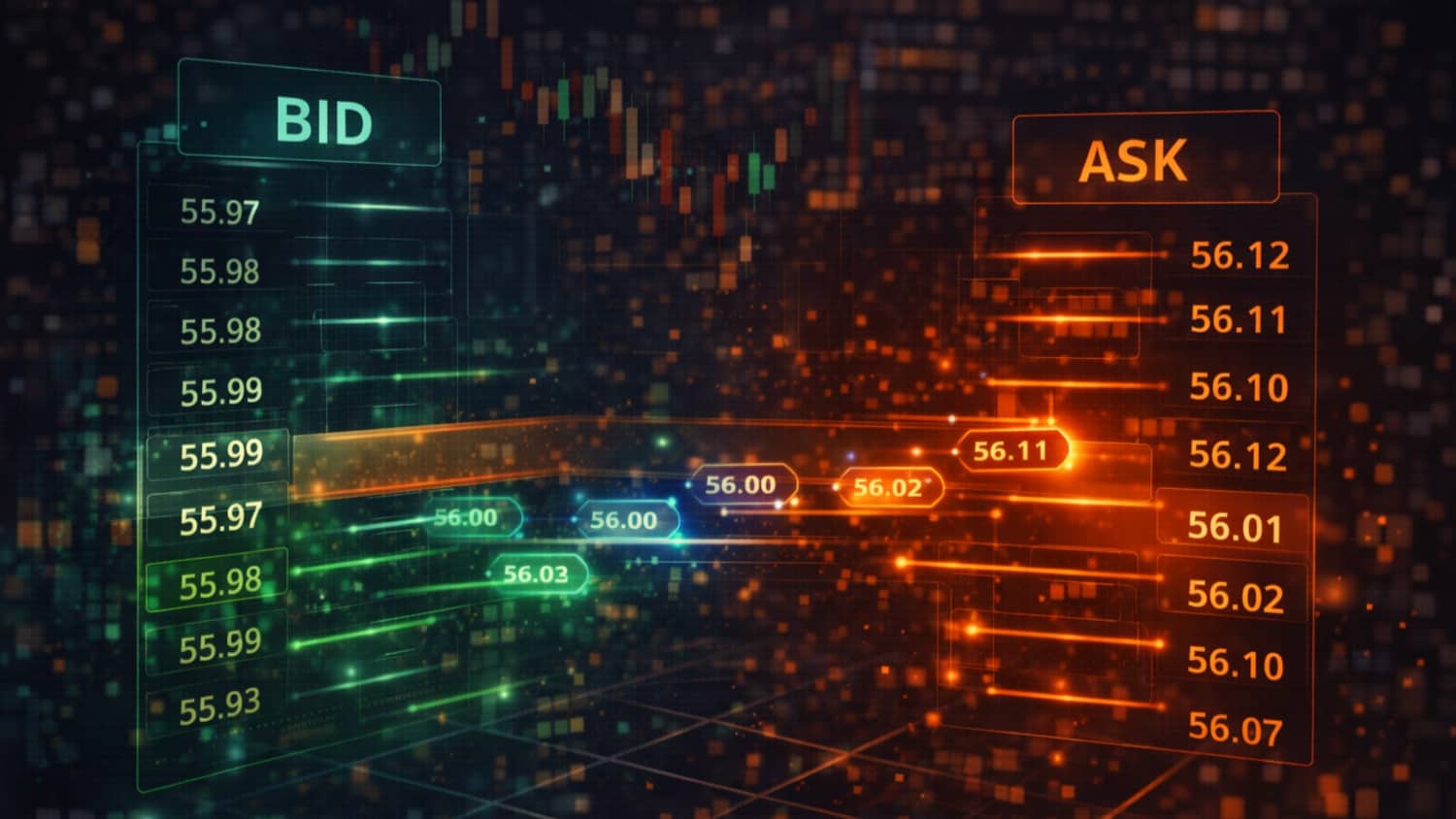
What common combinations usually tell you
No combination gives certainty, but some patterns are consistently more informative than others.
When used together this way, volume and open interest provide a stronger foundation for interpretation.
- High volume against low prior open interest often suggests new participation may be entering that line.
- High volume against already large open interest can still matter, but it usually needs better execution or repeated activity to confirm the read.
- Low volume against high open interest usually tells you the contract is established, not that fresh conviction is appearing right now.
The real edge in options volume analysis comes from how effectively you weigh the available evidence, not from trying to reach certainty. The stronger the volume expansion, the cleaner the execution, and the better the fit with the broader setup, the more seriously the trade deserves to be taken.
A simple example shows the difference more clearly. Imagine a stock trading at $98 ahead of a major product event. The 100 calls for next month carry 700 open interest coming into the session. By midday, that line has traded 4,800 contracts, several prints hit near the ask, and price starts pressing through resistance. That is a stronger read on open interest and volume in options flow than a contract with 30,000 open interest that trades 1,500 contracts with mixed execution and no price response.
Where traders misread flow most often
One of the most common mistakes is assuming that volume above open interest proves a trade is opening. The OIC’s open-interest guidance makes clear that open interest rises only when both sides are opening, falls when both sides are closing, and stays unchanged when one side opens while the other closes. Until clearing data is reflected in open interest, you are making a probability-based read rather than a definitive one.
Another common mistake is ignoring repeated prints at the same strike or expiration area in the chain. A single trade may be worth noting, but a cluster building around the same strike, expiration, or directional bias usually carries more interpretive value. Repeated activity, especially when supported by historical comparison and relative ranking, often provides stronger context than isolated one-off alerts.
The third mistake is chasing unusual options activity without checking whether the print is part of a spread or hedge. A large call order may look aggressively bullish in isolation, yet the broader structure could be neutral, protective, or paired with another leg elsewhere in the chain.
A practical workflow you can actually use
The process does not have to be complicated, but it does need to be consistent.
- Start with the contract that stands out by premium, size, or repeated activity.
- Compare today’s volume with prior open interest for that exact strike and expiration.
- Confirm with execution, price behavior, and catalyst timing before assigning conviction.
That sequence gives traders a practical way to use open-interest analysis in live trading. It helps keep you from building a full thesis around a single print before the surrounding evidence confirms or weakens the idea.
A structured workflow is far more effective than reacting to isolated alerts. Traders get better insight when they compare repeated activity, execution behavior, and volume expansion within a broader context. Tools that highlight these elements alongside historical comparison and contract-level detail make it easier to distinguish meaningful positioning from noise.
The relationship between volume and open interest becomes significantly more useful when trades are evaluated in context rather than isolation. Historical patterns, contract-specific behavior, and repeated participation often reveal far more than a single headline number.
What this means in real trading
The goal is not to predict every move perfectly, but to judge conviction more accurately.
When volume clearly exceeds the existing open-interest base, execution shows urgency, and price action begins to confirm the move, the overall read becomes much stronger. When only one of those elements is present, the trade deserves more caution.
For that reason, unusual options activity should be treated as a clue, not a final conclusion. Good traders know the tape is giving hints about intent, but it is not giving perfect access to motive. The more disciplined the process is, the less likely you are to mistake raw activity for real edge.
Conclusion
Reading open interest and volume effectively is less about chasing the biggest print and more about asking the right questions around it. Volume tells you where contracts traded today. Open interest tells you how much exposure already existed before the session ended. Execution, repetition, and market context help you decide whether the activity deserves conviction.
To strengthen your options volume analysis, start with the contract, compare its volume with the existing base, and wait for the surrounding evidence to confirm the idea before trusting it. That is the practical difference between noticing a trade and understanding it.
For traders who want cleaner context, the same principle applies: use structured data, repeated flow, and execution detail to make better reads. In that sense, reading open interest and volume is not about relying on one metric. It is a disciplined way to interpret participation before the broader move fully develops.
Similar Blog You
May Like
Understand how institutional money moves and turn complex options data into clear, actionable insights in real time.

Join traders using real-time options flow, institutional data, and advanced tools to make faster, more informed decisions.